
Kitchen
Setting up a kitchen you can actually cook in from a wheelchair or walker
Most people stop cooking because of reach and carrying, not skill. Solve those two and the kitchen is yours again.

By David Ellison
Senior mobility editor · Updated
Think in reach zones, not cabinets
From a seated position, comfortable reach runs from about 15 to 48 inches off the floor. From a walker, it's roughly hip to shoulder height — anything that requires bending low or stretching high while holding on with one hand is a fall risk.
Spend one afternoon moving everything you use weekly into that band. The stand mixer you use twice a year can live on the top shelf. The skillet, the salt, the coffee and the everyday plates should not.
The one-afternoon reorganization
- Empty the lowest and highest shelves; keep only rarely used items there.
- Move daily dishes to a counter-level open rack or a lower drawer.
- Put pull-out wire baskets in base cabinets so nothing requires kneeling.
- Keep a grabber/reacher hanging on the end of the counter, not in a drawer.
- Clear 30 inches of countertop next to the stove as your main work station.
Solve the carrying problem
You can't carry a hot pot while pushing a walker or wheeling a chair. A sturdy rolling utility cart (with a locking wheel) becomes your extra pair of hands: stove to table, fridge to counter, dishwasher to cupboard.
Rollator users can use the seat as a tray, but only with a lap tray or basket designed for it — and never for anything hot enough to burn.
Work sitting down, even if you can stand
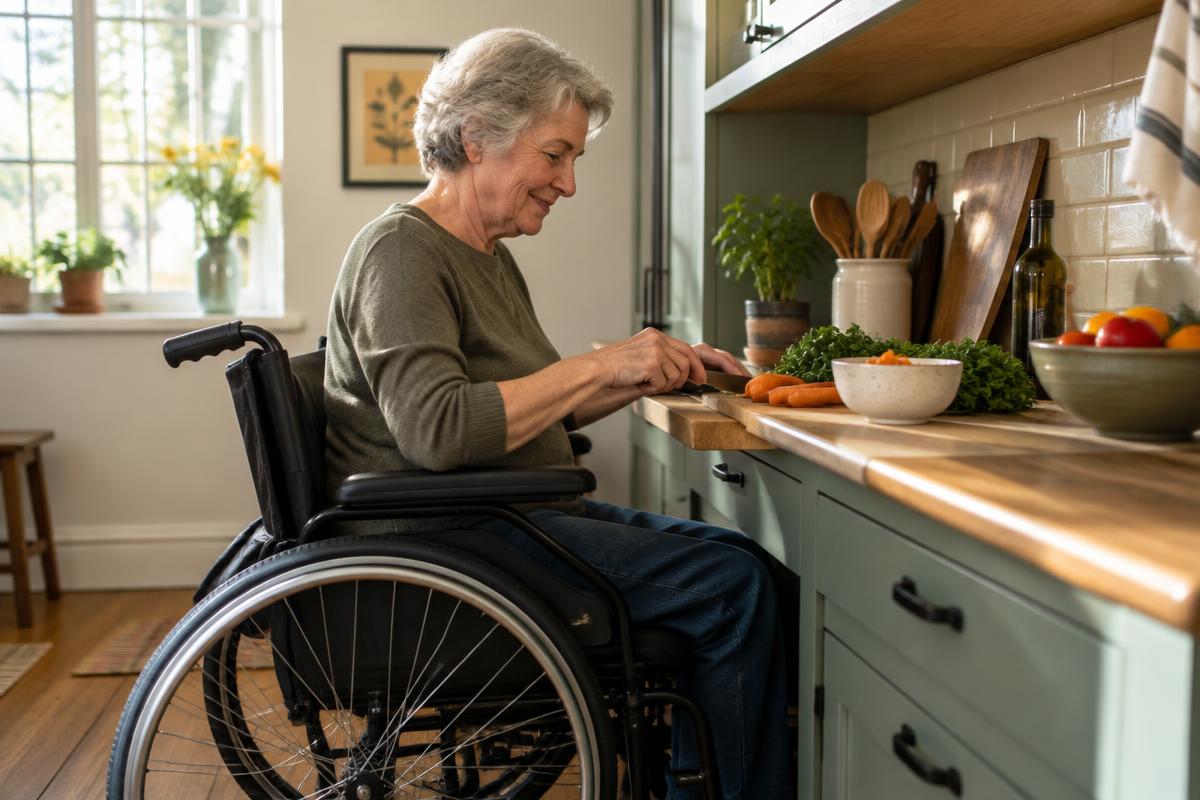
A pull-out cutting board at lap height, or simply a sturdy board across an open drawer, lets you chop seated. If you stand but tire quickly, a perching stool at the counter saves energy for the parts of the day you care about.
For wheelchair users, open knee space under one section of counter matters more than lowering all of it. Removing the doors and floor of one base cabinet is a cheap way to create it.
Small tools that punch above their weight
Lever-style faucet handles, an electric jar opener, a lightweight kettle tipper, induction cooktops that stay cool around the pan, and front-control appliances all reduce risk. A mirror angled over the stove lets a seated cook see into pots.
This guide is general information, not medical advice. Talk with your doctor, physical therapist or occupational therapist about what's right for you.