
Daily living
Getting dressed more easily: adaptive clothing, shoes and simple tools
Getting dressed sitting down, with the right few tools, turns a tiring 30-minute job into ten easy ones.

By David Ellison
Senior mobility editor · Updated
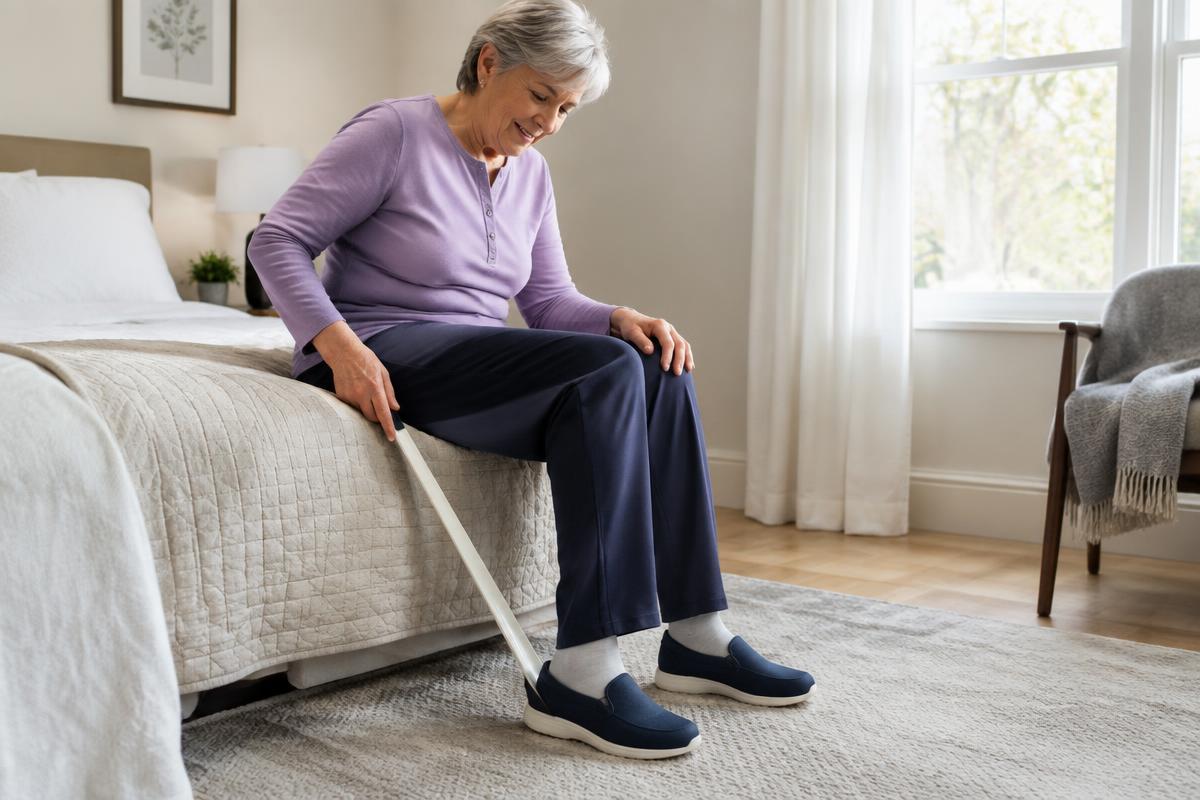
Always dress sitting down
Balancing on one leg to step into trousers is a classic fall. Sit on the edge of a firm bed or a chair with armrests, dress your weaker side first, and undress it last.
The five-tool kit
All of these together usually cost less than $50, and occupational therapists recommend them constantly.
What to buy
- A reacher/grabber (about 32 inches) to pull up trousers and pick things off the floor.
- A sock aid, so you never have to bend to your feet.
- A long-handled shoe horn (24 inches or more).
- A button hook with a zipper pull on the other end.
- Elastic no-tie laces that turn any sneaker into a slip-on.
Clothes that do the work for you
Look for elastic waists, magnetic or Velcro closures in place of buttons, front-opening tops, and pants with side zips for people who sit all day. Seated-cut trousers are higher in the back and don't bunch in a wheelchair.
Shoes: the most important choice
Pick closed-back shoes with a firm heel, a low wide sole, and a hook-and-loop or elastic closure. Backless slippers and worn-smooth soles are among the biggest fall risks at home. If your feet swell, look for extra-depth shoes with a wide opening.
This guide is general information, not medical advice. Talk with your doctor, physical therapist or occupational therapist about what's right for you.