
Bathroom
Bathroom safety without a remodel: the weekend fixes that matter
The bathroom is small, hard and wet. That's why it's where most home falls happen — and why a few hundred dollars here does more than anywhere else.

By David Ellison
Senior mobility editor · Updated
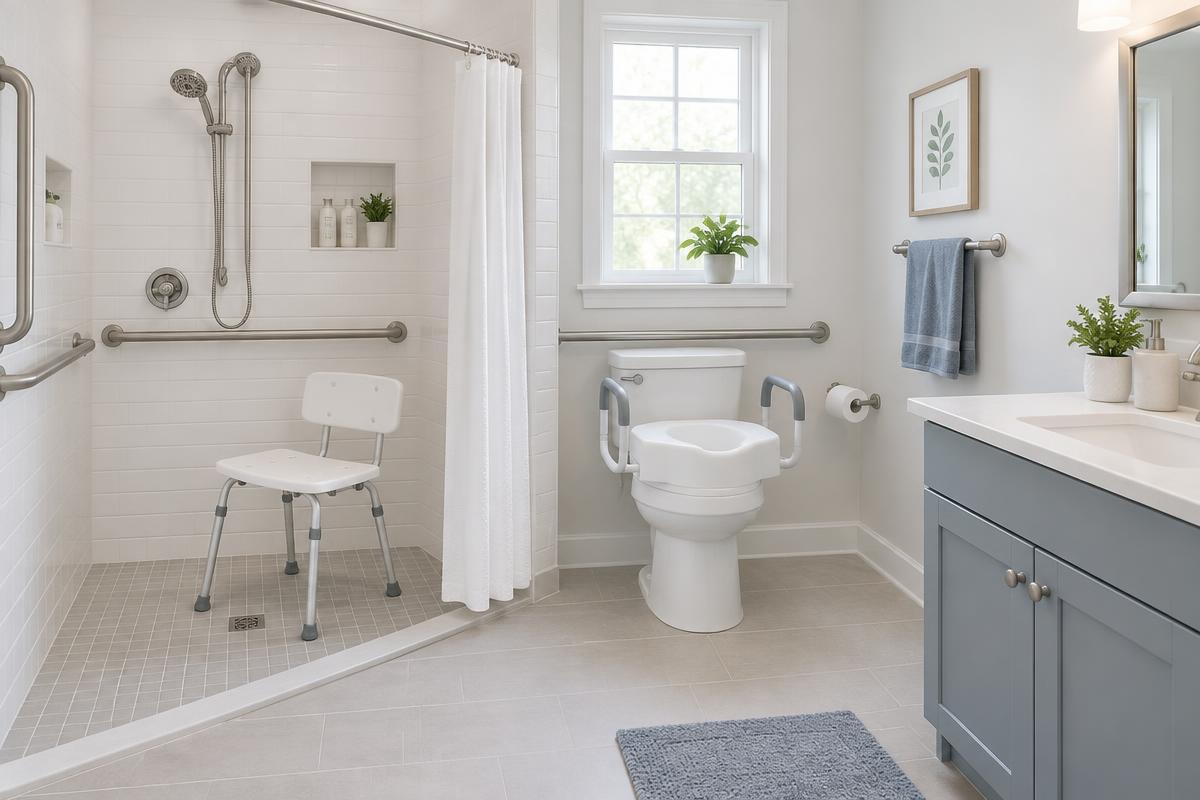
Do these in this order
If you only do one thing, install a grab bar where you step in and out of the tub or shower. Second, add one beside the toilet. Towel bars and soap dishes are not grab bars — they pull out of the wall under a falling person's weight.
The weekend list
- Grab bar at the tub or shower entry, screwed into studs or with rated wall anchors.
- Grab bar or toilet safety frame beside the toilet.
- Non-slip strips or a suction mat inside the tub.
- A shower chair or transfer bench so you sit to wash.
- A handheld shower head on a slide bar.
- A raised toilet seat (2–5 inches) if standing up from the toilet is hard.
- A plug-in motion nightlight for the route from bed to bathroom.
Shower chair or transfer bench?
If you can step over the tub wall safely, a shower chair with a back is enough. If you can't, a transfer bench sits half in and half out of the tub: you sit down outside, then slide your legs over. It's the single most useful item for people who've stopped bathing because the tub wall scares them.
Walkers and wheelchairs in small bathrooms
Many bathroom doors are too narrow for a walker to go through straight. Swing-clear hinges add almost two inches. Inside, remove the bath rug entirely — it's the most common trip hazard in the room — and store daily items on a shelf at waist height so you never let go of the walker to bend.
When it is worth calling someone
If you need to shower from a wheelchair every day, a curbless or low-threshold shower conversion is worth pricing. Ask your local Area Agency on Aging about home modification grants first — many communities cover part of the cost.
This guide is general information, not medical advice. Talk with your doctor, physical therapist or occupational therapist about what's right for you.