
Decision guide
Walker, rollator, wheelchair or power chair? How to choose
The right answer depends less on your diagnosis than on three things: your balance, your stamina and where you want to go.

By David Ellison
Senior mobility editor · Updated
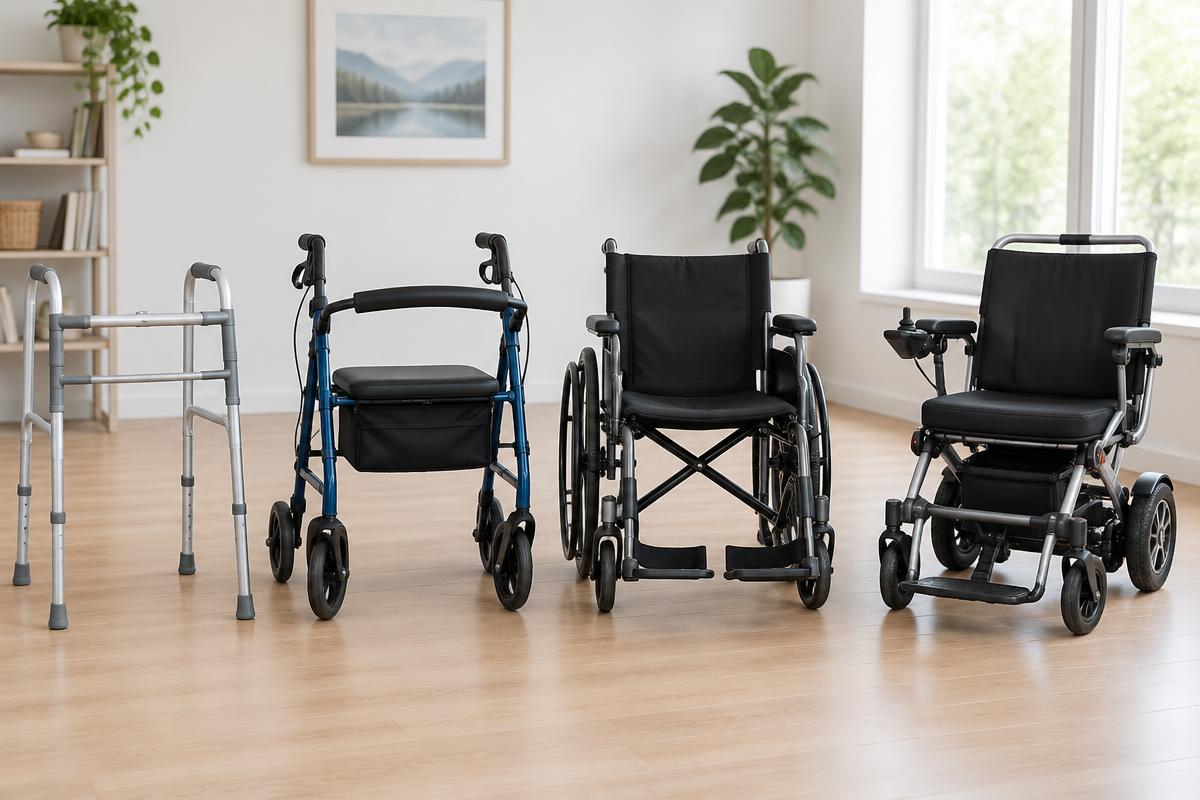
Standard walker
Best for people who need to lean on something for support and have limited balance, especially after surgery or a fall. Very stable, light and cheap, but slow — you lift or slide it with every step.
Rollator (wheeled walker with a seat)
Best for people who can walk steadily but tire or need balance help over distance. Faster and more natural than a standard walker, with a seat for rest breaks and a basket. Not ideal if you lean your full weight on it — it can roll away.
Manual wheelchair
Best for people who can't walk far safely but have the arm strength to self-propel, or who have a companion to push. Transport chairs are lighter but need someone else to push them.
Power chair or scooter
Best for people who can't walk far and don't have the arm strength or stamina to push a manual chair all day. A power chair turns tightly and works indoors; a scooter needs good sitting balance and more room but suits outdoor trips. Folding lightweight power chairs are the most practical choice when the chair has to go in a car.
Questions that point to the answer
- Can I stand and walk safely for 5 minutes? For 30?
- Do I lose my balance, or do I just get tired?
- Can I push myself in a manual chair for a whole outing?
- Will this go in my car, and who will lift it?
- Where will I use it most — at home, around town, or on trips?
Most people end up with two
A common setup is a rollator for around the house and short trips, and a lightweight power chair for longer outings. Ask a physical or occupational therapist for a mobility assessment — it's often covered, and it takes the guesswork out.
This guide is general information, not medical advice. Talk with your doctor, physical therapist or occupational therapist about what's right for you.