
Outdoors
Parks, trails and beaches with a wheelchair or power chair
Pavement is easy. Packed gravel is usually fine. Sand and wet grass are where you need a plan.

By David Ellison
Senior mobility editor · Updated
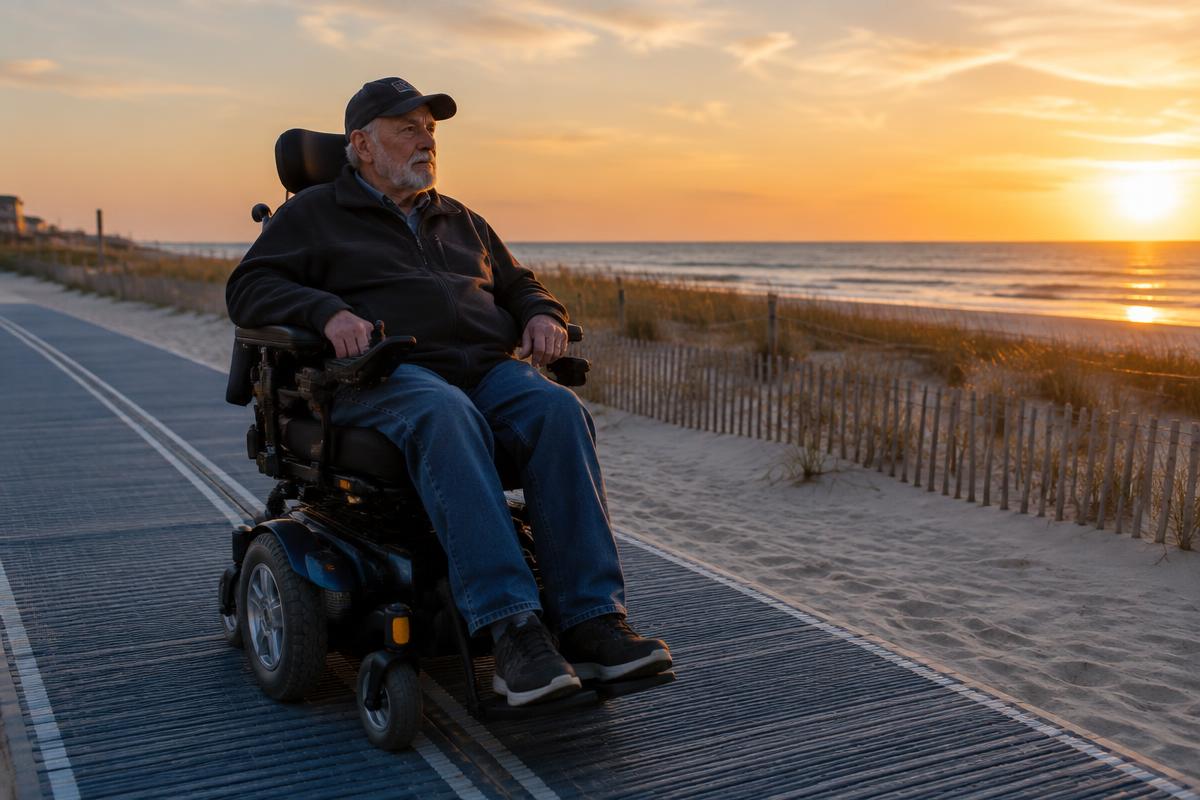
Know your surfaces
Paved paths and boardwalks work for everything. Firm, packed crushed-stone trails are fine for most power chairs and rollators with larger wheels. Loose gravel, deep grass, mud and dry sand stop small front casters — and a stuck chair is tiring and discouraging.
Finding the right places
Search your state parks website for 'accessible trails' — many list surface type, grade and length. Apps and sites like AllTrails let you filter for wheelchair-friendly and paved routes. Rail-trails, converted old railway lines, are flat and wide by design.
What to bring
- A fully charged battery and a realistic idea of your range.
- Water, sun hat and sunscreen — sitting still in the sun heats you faster.
- A phone with location sharing turned on.
- A small towel for wet seats.
- Someone else, the first time you try a new trail.
Beaches
Many public beaches now have roll-out access mats and loan free beach wheelchairs with balloon tires. Call the parks department or lifeguard station ahead to reserve one. Don't drive a standard power chair into sand — the motors and bearings hate it.
Take breaks before you need them
Turn back at a third of your battery or energy, not half. The trip home is often uphill, and you'll be more tired than you expect.
This guide is general information, not medical advice. Talk with your doctor, physical therapist or occupational therapist about what's right for you.