
Car transfers
Getting in and out of a car safely
Sit first, then swing your legs in. It sounds obvious, but it's the single change that makes car transfers safe.

By David Ellison
Senior mobility editor · Updated
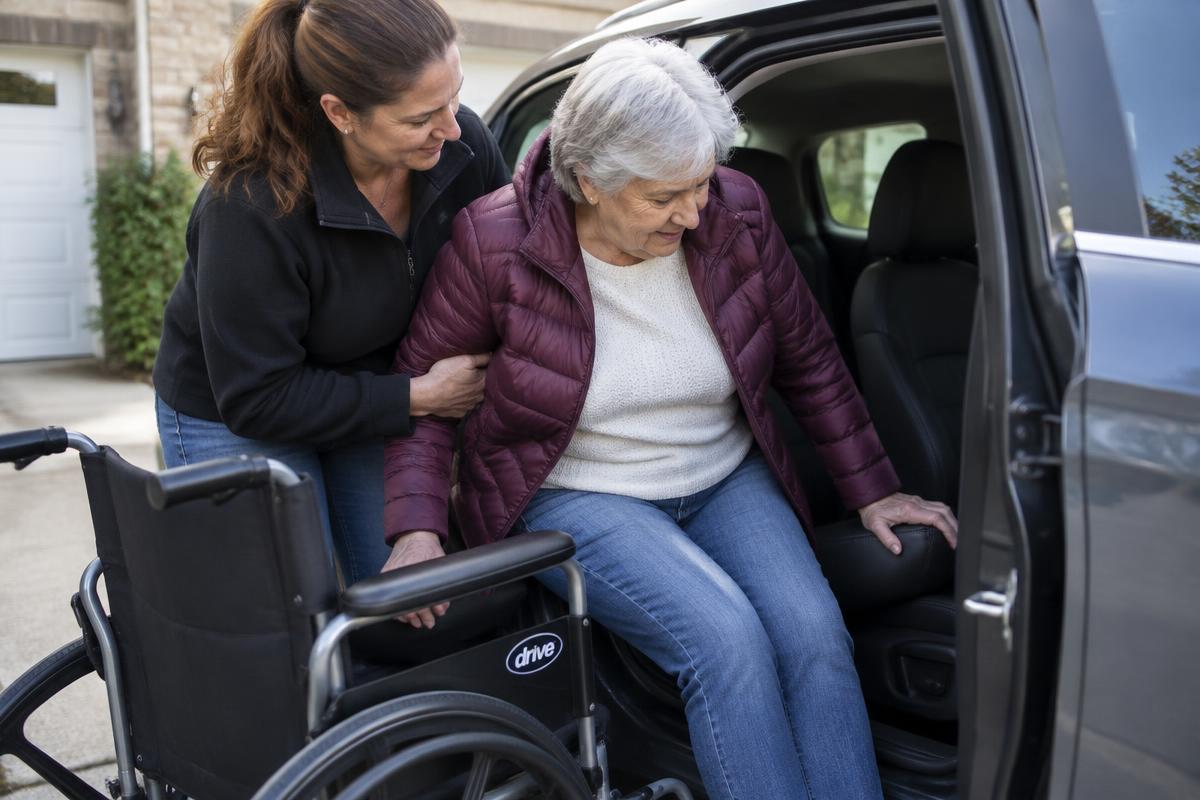
The basic transfer
Park away from the curb on flat ground, with the seat pushed all the way back and reclined slightly. Back up until you feel the seat against the back of your legs. Reach back for the seat or a handle — never the door, which can swing — and sit down slowly. Then swing both legs in together, turning your whole body.
Cheap aids that help a lot
- A portable car handle that slots into the door latch for something solid to push on.
- A swivel seat cushion so you turn without twisting your spine.
- A plastic bag or satin sheet on cloth seats to reduce friction.
- A leg lifter strap for heavy or weak legs.
- A transfer board for wheelchair users bridging the gap from chair to seat.
From a wheelchair
Angle the chair about 30 degrees to the car, as close as possible, and lock both brakes. Swing away or remove the footrest and the armrest on the car side. Use a transfer board if the gap or height difference is big. A caregiver should use a gait belt, not your arms or clothing.
Choosing a car
The easiest cars to get into have a seat at about hip height — many small SUVs and crossovers. Low sports sedans and tall trucks are both hard. Check the trunk or cargo height too: that's where your chair or walker has to go.
Loading the chair or walker
Lighter equipment is the difference between going out alone and waiting for help. That's why we spend so much time on weight — see our guide on how much mobility equipment should weigh.
This guide is general information, not medical advice. Talk with your doctor, physical therapist or occupational therapist about what's right for you.